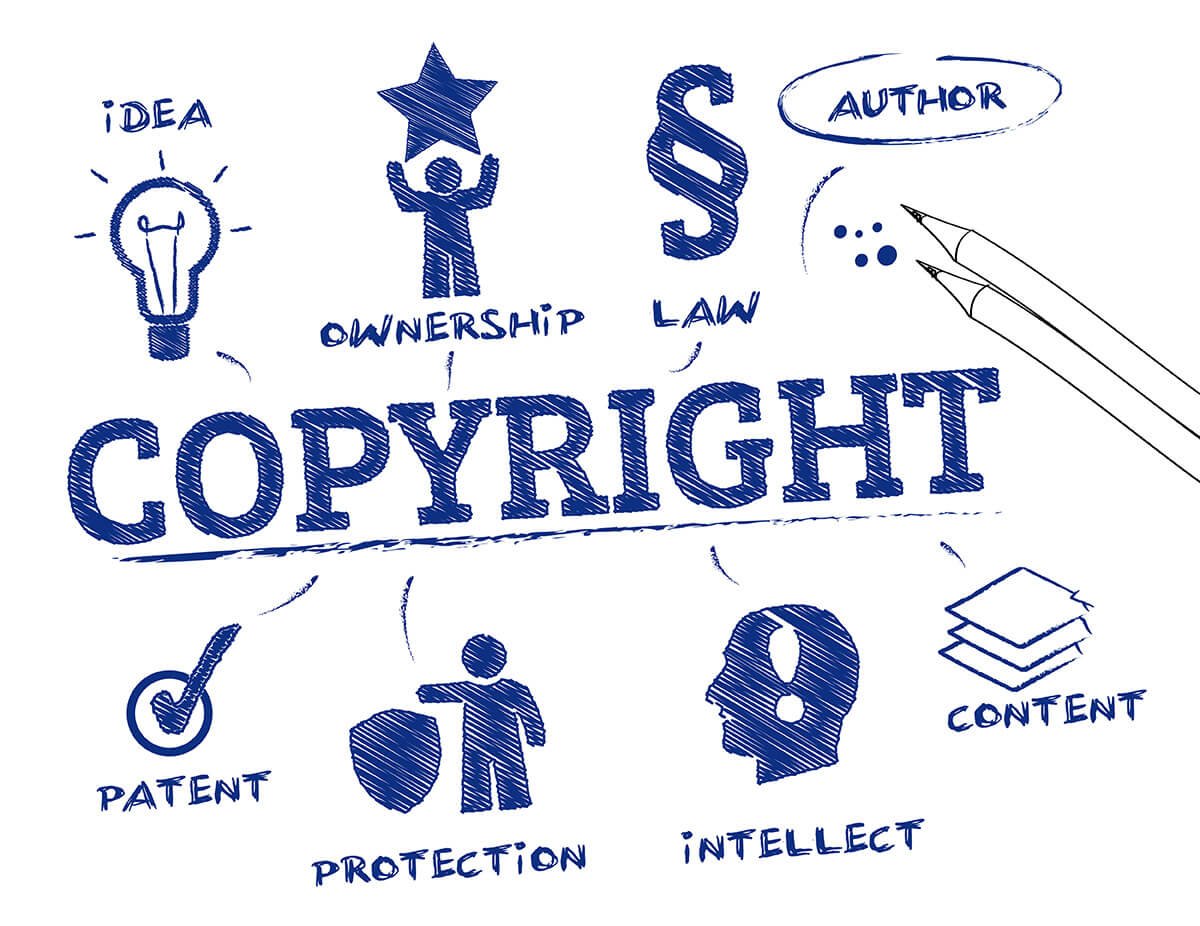
Copyright Is Your Most Pervasive IP Right
While patents and trademarks often receive more strategic attention from startup founders, copyright is actually the most pervasive IP right operating in any business. Every original piece of content your startup creates - website copy, marketing materials, product photographs, source code, UI designs, training videos, pitch decks, product documentation - automatically attracts copyright protection from the moment it is created. No filing, no registration, no payment required.
This automatic, zero-cost protection is extraordinarily valuable - but it comes with critical conditions that founders must understand. Copyright protects the specific expression of an idea, not the underlying idea itself. Copyright belongs to the creator, not the commissioning party, unless there is a written assignment agreement. And copyright can be violated both ways - your startup can infringe third-party copyright just as others can infringe yours.
What Copyright Protects
Under Section 13 of the Copyright Act 1957, copyright subsists in original literary, dramatic, musical, and artistic works, cinematographic films, and sound recordings. For startup founders, the most practically relevant categories are:
| Category | What It Covers | Startup Examples |
|---|---|---|
| Literary works | Any written expression - books, articles, code, databases | Source code, API documentation, product manuals, website content |
| Artistic works | Graphic works, logos, photographs, illustrations, UI designs | App icons, brand illustrations, product photos, UI mockups |
| Computer programs | Software source and object code as literary works | Mobile apps, SaaS platforms, firmware, algorithms |
| Databases | Collections of data arranged in a systematic way | Customer databases, product catalogues, training datasets |
| Cinematographic films | Any sequence of visual images recorded on material | Product demo videos, explainer videos, training content |
The Originality Requirement
Copyright subsists only in original works. Originality under Indian copyright law requires that the work originate from the author - it must not be copied from another work. There is no requirement that the work be novel or unique in the patent sense; only that it reflect the author's own intellectual effort. A photograph that is entirely derivative of another work has no copyright. A photograph that reflects the photographer's creative choices in framing, lighting, and composition is original. For startup content, this means: generic stock text reformatted without creative input has minimal copyright; original product descriptions, thought leadership articles, and uniquely designed UI elements are fully protected.
Copyright Ownership — The Freelancer Problem
The most commercially significant copyright question for Indian startups is ownership - and the answer is frequently not what founders assume. The default rule under Section 17 is simple: the creator owns the copyright. For employees, Section 17 creates an exception - the employer owns copyright in works created in the course of employment. But for independent contractors and freelancers - hired to write code, design graphics, create marketing content, or develop UI/UX - the exception does not apply. The freelancer owns their work. Unless they have assigned it in writing.
This means that a startup that commissioned its website from a freelance developer, had its logo designed by a freelance graphic designer, and had its core product built by contract developers potentially does not own the copyright in any of these critical assets - unless it has signed IP assignment agreements with every one of these creators. This is one of the most common IP gaps discovered during investor due diligence.
Copyright Registration in India
While copyright arises automatically, registration at copyright.gov.in provides significant practical advantages. The registration certificate is admissible as prima facie evidence of copyright ownership in legal proceedings - removing the burden of proving ownership through other means. Registration also creates a public record that establishes the date of creation and the identity of the copyright owner, which is invaluable in ownership disputes. The registration fee is Rs.500 per work for individuals and Rs.2,000 per work for companies. For startups with significant copyright-dependent business models - SaaS platforms, content businesses, educational startups - registering core copyright assets is a worthwhile investment.
Copyright in AI-Generated Content
Generative AI tools - text generators, image generators, code assistants - are increasingly integrated into startup workflows. The copyright status of AI-generated output is genuinely unsettled in India. The Copyright Act 1957 defines the author of a computer-generated literary, dramatic, musical, or artistic work as the person who causes the work to be created. Applied to AI output, this suggests the person who provides the prompt and causes the AI to generate the content may be the author - but courts have not yet ruled directly on this question in India.
Startups using AI-generated content should: document the human creative input and decision-making involved in producing each significant piece of AI-assisted content; avoid relying solely on AI output for core brand assets (logos, taglines) without significant human creative direction and modification; and monitor evolving guidance from the Copyright Office and court decisions as this area develops.
For software-specific copyright issues including code ownership, SaaS protection, and piracy prevention, read the Software and Digital Copyright guide.
Fair Dealing and Copyright Exceptions
Section 52 of the Copyright Act 1957 lists acts that do not constitute copyright infringement - the fair dealing provisions. For startups and businesses, the most relevant fair dealing exceptions are: use for the purpose of research or private study; use for criticism or review of the work or another work; reporting of current events; and reproduction for use by a teacher in the course of instruction. These exceptions are narrower than the US fair use doctrine and must be interpreted strictly. A startup that uses copyrighted material for commentary or review purposes must ensure the use genuinely falls within the scope of the specific exception and credits the source. For complete guidance on copyright in the digital and software context, visit the Software and Digital Copyright guide.