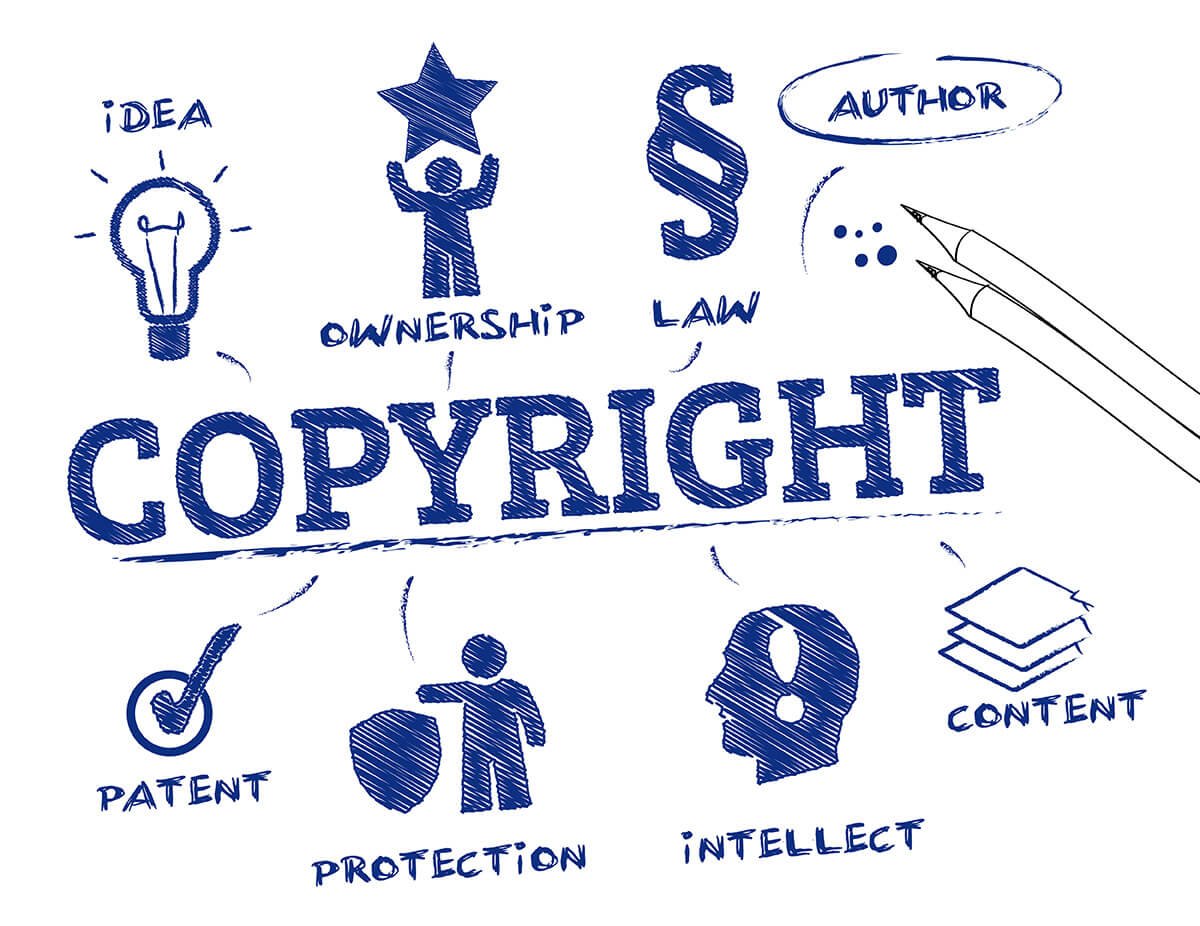
Copyright in India Is Automatic — But Registration Matters
Under the Copyright Act, 1957, copyright subsists automatically from the moment a work is created and fixed in tangible form. Literary works (including software code), artistic works, music, films, and sound recordings are all protected without any filing requirement. What registration at copyright.gov.in does is create a legal presumption of ownership — shifting the burden of proof in any infringement dispute.
What Copyright Protects
Copyright protects the expression of an idea, not the idea itself. Your specific words, melody, images, and code are protected. The underlying concept, style, or factual information is not. Software source code is a literary work; a mobile app's UI design is an artistic work. Both are automatically protected — but the algorithm itself, as a mathematical method, is not copyrightable.
Duration of Protection
- Literary, artistic, musical, dramatic works: Life of author + 60 years
- Cinematographic films and sound recordings: 60 years from first publication
- Photographs and government works: 60 years from first publication
How to Register at copyright.gov.in — Step by Step
Step 1: Create an account at copyright.gov.in — the Copyright Office portal maintained by DPIIT, New Delhi.
Step 2: Fill Form XIV. Specify: type of work, title, year and country of first publication, author details, and the copyright owner's details if different from the author.
Step 3: Pay the fee online — ₹500 per work for literary, artistic, dramatic, and musical works; ₹2,000 for cinematographic films and sound recordings. A diary number is issued immediately as proof of filing.
Step 4: Mandatory 30-day waiting period for public objections. If no objection — or objection resolved in your favour — a registration certificate is issued, typically within 60–90 days of filing.
India's 2012 Amendment: Non-Waivable Residual Royalties
The Copyright (Amendment) Act, 2012 introduced a globally distinctive provision: lyricists, composers, and authors who assign their copyright to a film producer or music label retain a non-waivable right to royalties for all commercial exploitation — streaming, broadcast, and public performance — even after a full copyright assignment. This right cannot be contracted away, a protection not available in the USA or UK.
Moral Rights Under Section 57
Section 57 gives Indian authors two non-waivable moral rights that survive even complete assignment: (1) the right of attribution — to be identified as author; and (2) the right of integrity — to prevent distortion, mutilation, or modification of the work that prejudices the author's honour or reputation. These rights cannot be transferred by any contract.
Fair Dealing — What Is Not Infringement
Section 52 lists specific permitted acts: private use and research; criticism, review, and current events reporting; educational institution use; library reproduction; and accessibility formats for persons with disabilities. India's fair dealing is narrower than US fair use — only the specifically listed acts qualify. For a complete comparison of all 9 IP types including copyright, visit the India IPR Ready Reckoner.